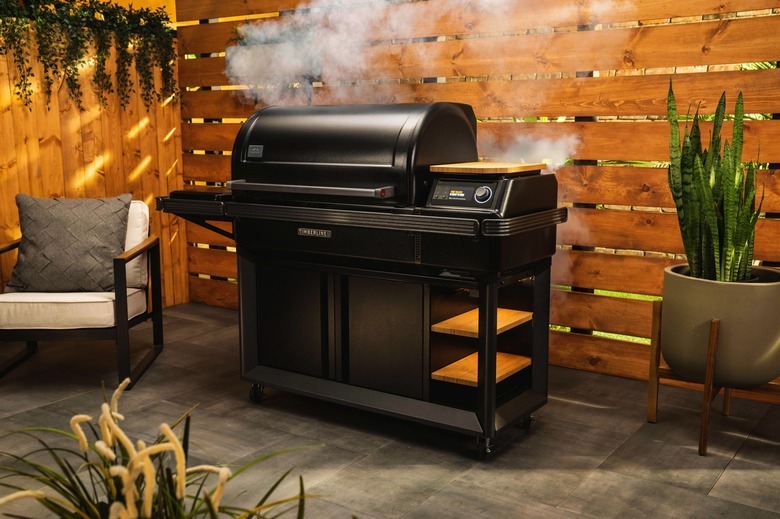
A backyard grill used to ask one question: can it cook the meat right? That question feels small now. The Traeger Timberline XL sits in a new lane, where a wood pellet grill is expected to smoke ribs, sear steaks, hold steady heat in bad weather, track food from an app, and still look clean enough for a built-in patio setup. For many USA homeowners, that is the real draw. They are not shopping for another weekend toy. They want one serious cooking station that can carry a Fourth of July brisket, a Sunday chicken dinner, and a quiet Tuesday salmon without turning the cook into a full-time babysitter. Coverage of outdoor cooking trends has made one thing clear: buyers now care as much about control as smoke flavor. Smart grill technology sounds flashy, but the better test is simple. Does it save the cook when guests arrive early, the wind picks up, or the sides need heat at the same time as the meat?
Why Traeger Timberline XL Became the Grill Tech Conversation
The buzz around this flagship is not only about size or brand loyalty. It comes from the way several cooking jobs have been folded into one machine. That matters because backyard cooks do not live in showroom conditions. They run late, forget prep steps, open the lid too often, and try to cook for people who all want different things. A high-end wood pellet grill earns attention when it reduces those weak spots without making the cook feel locked out of the process. The machine is trying to turn a patio corner into a working kitchen, and that is a bolder idea than adding another digital screen. That is why the announcement landed with grill fans who already own decent gear. It did not promise smoke alone. It promised fewer broken moments between the first prep tray and the final plate.
It feels less like a smoker and more like an outdoor station
The first thing that separates this model from the average pellet cooker is the station mindset. It is built around a full meal, not only the smoked item in the center. You can smoke pork shoulder on the grates, finish a sauce on the side burner, keep vegetables moving, and still have room to stage food without running back through the patio door every five minutes.
That shift is bigger than it sounds. A lot of outdoor cooking fails in the gaps between tasks. The steak is ready, but the mushrooms are still inside. The ribs are wrapped, but the glaze pan has no heat source nearby. The side induction cooktop matters because it keeps those jobs in the same zone. Anyone who has hosted a Labor Day meal knows this small chaos. One tray needs foil, one pan needs heat, and somebody is asking where to put the corn.
Here is the non-obvious part: the best tech on a grill may be the part that stops you from walking away. Backyard cooking gets better when your hands stay near the food. A separate indoor stove breaks that rhythm. An outdoor kitchen grill that keeps the whole meal outside can make you cook calmer. Calm cooks make better calls.
The smart features solve boring problems, not flashy ones
App control sounds like the headline, but the duller features carry more value. Pellet level checks, temperature tracking, meat probes, and guided control help with the chores that ruin long cooks. Nobody brags about avoiding a hopper surprise halfway through a pork butt. Still, that is the difference between a clean dinner and a late-night rescue run.
Smart grill technology also helps newer cooks build trust. If you are smoking your first brisket for a family gathering in Dallas or Kansas City, you do not want mystery. You want signals. Heat trends, probe readings, and remote checks give you a clearer sense of what is happening before panic sets in. That does not remove skill. It gives skill something to react to.
The counterintuitive truth is that tech does not make barbecue less human. Bad tech can. Good tech gives you more room to make human choices. You still decide when bark looks right, when chicken skin needs more time, and when the steak deserves a hot finish. The screen should serve the cook, not replace the cook.
The Tech Matters Most When the Cook Gets Messy
A grill can look brilliant on a product page and still annoy you on a normal Saturday. Real cooking is messy. Kids open the back door. Guests ask when food will be ready. Rain pushes through even when the forecast promised sun. The value of this machine shows up less in perfect conditions and more when the cook starts to drift off plan. That is why the better comparison is not spec sheet against spec sheet. It is dinner against dinner. A Friday night cook exposes weak design faster than any showroom demo. The lid opens too long, the sauce burns on a kitchen stove, and someone cuts into chicken before the cook has checked the center.
Temperature control is about recovery, not a magic number
Many shoppers focus on the top temperature range first. That is fair, but it misses the bigger point. Holding heat is one job. Getting back to target after the lid opens is another. Every pellet cooker loses heat when you check a rack of ribs or rotate chicken thighs. The question is how gracefully it recovers.
The insulated build and combustion control aim to keep those swings from becoming a full course correction. For a USA buyer in Minnesota, Colorado, or upstate New York, that matters more than it does in a mild coastal climate. A cold breeze can punish a thin cooker. A steadier body helps protect the cook from the weather. This becomes clear during longer cooks, when one bad hour can push dinner far past the time people expected to eat. A backyard cook in Chicago does not need laboratory precision in January. They need a grill that can lose heat, recover, and keep the ribs moving toward dinner instead of turning the schedule into a guessing game.
This is where a best pellet grill buying guide should judge more than headline heat. A strong wood pellet grill is not one that never moves a degree. That is fantasy. It is one that behaves in a way you can read, learn, and trust over time. Consistency is not drama. It is what lets you relax.
The side burner changes the whole meal plan
The side induction cooktop is the feature many people will underestimate before they own it. Pellet grills are excellent at steady smoke and indirect heat. They are less natural at quick pan work. A hot side burner fills that gap without forcing the whole dinner to orbit around the main chamber.
Think about a Memorial Day cookout in a suburban Ohio backyard. Burgers are resting, corn needs butter, onions need a fast sauté, and someone asks for a sauce warmed up. On a basic smoker, those jobs scatter across the kitchen. On this setup, they stay outside. That may sound like a small comfort until you are the person carrying hot pans through a sliding door while kids run past with paper plates.
The surprise is that the side burner may help simple dinners more than showpiece meals. A weeknight chicken breast with blistered peppers is not a trophy cook. Yet it is exactly the kind of meal that decides whether a high-price grill gets used often or becomes patio furniture with a power cord. Gear earns loyalty on ordinary nights. If the cook reaches for it on a plain Wednesday, not only on a holiday, the design has done something right.
Where the XL Size Changes Backyard Cooking Habits
Size is not only about bragging rights. A wide cooking area changes how you plan. It gives you zones, staging room, backup space, and room for mistakes. Still, large gear comes with tradeoffs. The smartest buyer treats the XL size as a lifestyle choice, not a trophy. A bigger chamber can make a better cook, but only when the cook uses space with intent. Fill every rack without a plan and you have not upgraded dinner. You have created a larger traffic jam. The extra space works best when it supports a plan: low food on one rack, quick items on another, and a clean landing spot for the tray that needs to come off early. That is how size turns into control.
Space helps when food finishes at different times
The three-rack layout gives you room to cook in layers. That sounds simple until you host a crowd. Brats can sit away from hotter zones, ribs can take the main stage, vegetables can ride higher, and a tray of wings can move as needed. You stop thinking in one flat surface and start thinking in a full chamber. That is the mental shift serious pellet cooking needs.
That helps because food rarely finishes together. Anyone who has cooked for ten people knows the timing problem. Chicken thighs lag. Sausage gets done early. A pan of beans needs warmth, not more smoke. Space lets you solve that problem without pulling everything off and hoping the kitchen oven saves you. On a football Sunday, that can mean warm food across three hours instead of one rushed serving window.
There is a hidden discipline here. More room can make a cook sloppy if you fill every inch. The better move is to leave working space. Empty grate area is not wasted. It is your escape lane when flare-ups, timing changes, or guest requests hit. The largest cooking surface is often most useful when part of it stays open.
Bigger is better only when your patio can handle it
The XL size asks for a real home. It needs space, power, airflow, and a path that makes sense from storage to cooking. A small deck can feel crowded fast, especially when people gather around the grill and someone sets down a cooler in the wrong spot.
This is where the outdoor kitchen grill idea becomes useful. Built-in potential makes sense for homeowners who are already planning counters, storage, lighting, and seating. It is less convincing for someone who needs to roll the grill across pavers every weekend. Weight and footprint become part of the purchase, not minor notes. The wrong layout can turn a dream setup into an obstacle course.
A practical backyard outdoor kitchen planning tips checklist should start with movement. Can you open the lid fully? Can two people pass behind the cook? Can you reach pellets, tools, trays, and trash without stepping through the party? Those answers matter more than an extra gadget. Outdoor cooking is physical work, even when the controls are digital.
Buying Reality: Who Should Spend This Much and Who Should Not
High-end grill talk can get silly fast. People start defending price tags as if spending more proves better taste. It does not. The right question is whether the machine matches the way you cook. This model makes sense for some USA households and makes little sense for others. That honesty helps the right buyer more than hype does. A premium grill should solve real pain, not create a fancy reason to cook the same two burgers. The buyer should ask a plain question before looking at monthly payments: what part of outdoor cooking keeps annoying me? If the answer is timing, monitoring, cleanup, space, and side-dish chaos, the pitch starts to make sense.
The best buyer cooks often enough to notice the small wins
The best fit is the person who cooks outdoors often and hates friction. Maybe you smoke twice a month, grill every weekend in warm weather, and host family events where timing matters. In that case, the app control, probes, cleanup system, cooking space, and side burner are not random extras. They remove small headaches that show up again and again.
That kind of buyer also cares about repeatability. When ribs turn out right, you want to know why. When chicken dries out, you want clues. Smart grill technology can help you connect heat, time, probe readings, and your own choices. It becomes a learning tool, not only a control panel. The best owners will treat the data like notes in the margin of a recipe.
Food safety should stay part of that learning. Probe readings are useful, but safe internal temperatures still matter. The USDA safe minimum internal temperature chart is worth saving because color and texture can fool even experienced home cooks. A nice smoke ring does not prove dinner is safe.
The wrong buyer may be happier with less tech
This is not the right grill for everyone. If you cook a few burgers six times a year, the price will feel absurd after the first rush wears off. If you love live fire, lump charcoal, and hands-on heat control, a connected pellet setup may feel too managed. That is not a flaw. It is a mismatch.
There is also the ownership side. More tech means more systems to understand. Wi-Fi, firmware, probes, pellet sensors, and induction controls all add comfort when they work as expected. They also demand patience when setup gets fussy. A simple kettle grill never asks for an app update. Some cooks will hear that sentence and know their answer.
The honest view is that this is a premium outdoor cooking station for people who will use its depth. Buy it because your cooking life is wide enough for it. Do not buy it because a headline told you the future of grilling has arrived. The best grill is the one that matches your habits so well that you stop admiring it and start cooking on it.
Conclusion
The most interesting thing about this flagship is not that it tries to impress you. Expensive grills do that all the time. What makes this one worth discussing is how many ordinary cooking problems it tries to pull into one place: heat control, meal timing, prep space, cleanup, monitoring, searing, and built-in patio planning. For the right backyard cook, the Traeger Timberline XL is less about showing off and more about removing the weak links that make outdoor meals feel harder than they should. That does not make it the best choice for every patio. A casual burger cook can spend far less and stay happy. A fire purist may never love a connected pellet system. But for homeowners who cook outside often, host real meals, and want one station that can handle smoke, sides, and timing pressure, the case is strong. Buy for your habits, not the hype, and your grill will earn its space every week. The smartest purchase is not the loudest one. It is the one that makes dinner feel easier six months after the box is gone.
Frequently Asked Questions
How much cooking space does this kind of flagship pellet grill need for a family?
A family of four can manage with far less space, but a larger chamber helps when you cook mixed foods at once. The real benefit is not filling every grate. It is having room to separate meat, sides, warming trays, and food that finishes early.
Is a wood pellet grill better than gas for backyard cooking?
It is better for smoke flavor, low heat control, and long cooks. Gas is better for speed, high direct heat, and low fuss. Many USA homeowners choose pellets when ribs, pork shoulder, chicken, and weekend hosting matter more than fast weeknight burgers.
Does smart grill technology make barbecue too automated?
It can feel that way if you enjoy managing every fire change by hand. For most home cooks, it mainly reduces guesswork. You still choose seasoning, timing, doneness, wrapping, resting, and when the food looks right.
What is the biggest benefit of an induction side burner on a pellet grill?
It keeps the whole meal outside. Sauces, onions, vegetables, butter, beans, and searing tasks no longer need a separate kitchen trip. That makes a bigger difference during parties, when the cook needs to stay near guests and food.
Is an outdoor kitchen grill worth it for a normal suburban patio?
It can be worth it when you cook outside often and have the space to support it. Counter room, storage, lighting, and safe movement matter as much as the grill itself. Without those basics, a large setup can feel crowded.
Can a pellet grill sear steak well enough?
It can sear better when it has a dedicated high-heat surface or side burner. The main chamber is usually stronger at steady smoke and roasting than steakhouse-style crust. For thick steaks, smoke first, then finish hot.
What should buyers check before spending on a premium pellet grill?
Measure the patio, confirm access to power, plan pellet storage, check cleanup steps, and think about how often you cook outdoors. A premium machine only pays off when its features solve problems you face often.
Are connected probes enough to guarantee safe meat?
No. Probes help track progress, but placement and safe temperature targets still matter. Put the probe in the thickest part away from bone or heavy fat, then confirm with a trusted instant-read thermometer when safety matters.