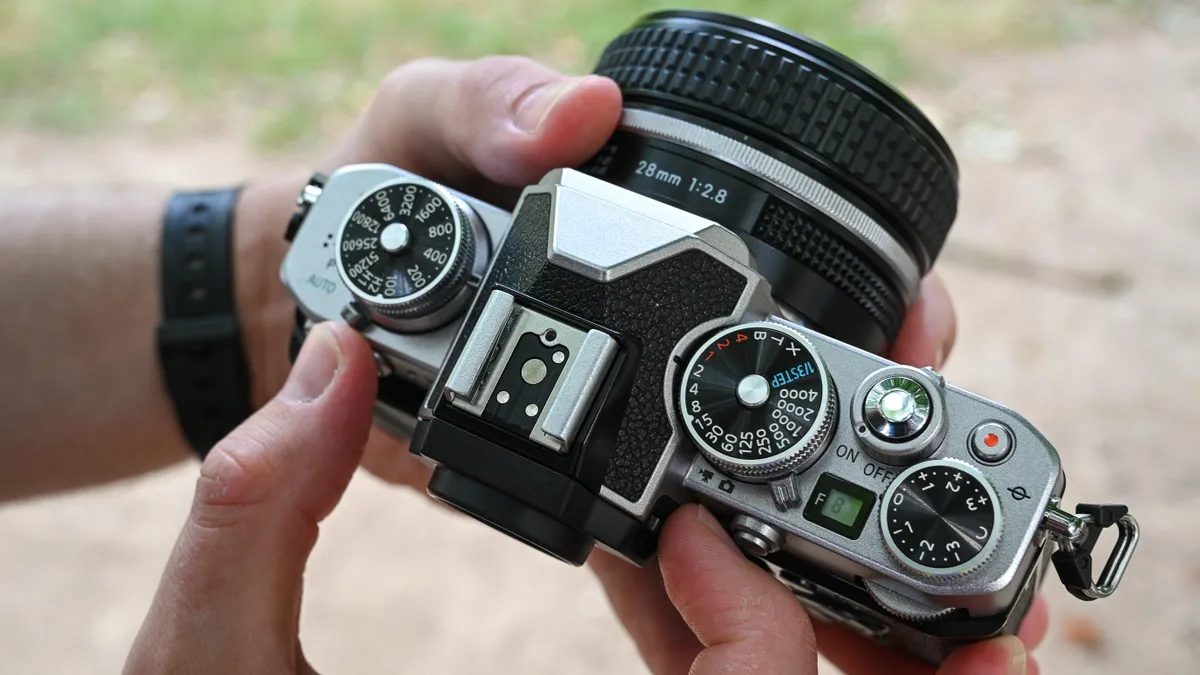
A camera does not become desirable because it looks old. It becomes desirable when the old look changes how you shoot. The Nikon Zf Mirrorless Camera has landed in that rare space where U.S. buyers see style first, then discover a serious full-frame tool underneath. That matters because the retro camera trend has become crowded, and plenty of pretty bodies feel thin once you start working in bad light, fast scenes, or paid weekend jobs. Nikon’s answer feels different. It gives you metal dials, a film-era shape, a dedicated black-and-white switch, modern subject detection, strong stabilization, and access to Nikon Z mount lenses without asking you to treat nostalgia as a weakness. For readers following consumer gear coverage, the bigger story is not hype. It is why photographers keep choosing a body that makes the act of shooting feel slower, yet often helps them come home with better frames. Nikon lists the Z f with a 24.5MP full-frame sensor, EXPEED 7 processing, 9 subject-detection categories, 4K/60p video, and up to 8.0 stops of in-camera vibration reduction.
Why Nikon Zf Mirrorless Camera Demand Feels Different From a Normal Camera Trend
Most camera trends burn hot because a sensor arrives, a review score jumps, or a creator posts a sharp sample gallery. This one has a softer pull. The Z f has become a camera people want to carry before they argue about charts, and that is not a small thing. A body that stays home makes no image, even if its spec sheet wins a debate. Buyers want a retro style camera that feels personal, but they do not want to give up autofocus, stabilization, video, or lens choice. That is the pressure point Nikon found. The buyer who loves a brass-dial mood board is often the same buyer who needs clean indoor files for a child’s recital or sharp focus on a dog running through a park. Nikon’s trick is that it refuses to separate emotion from performance. The design gets you to pick it up. The system keeps you from regretting it.
The appeal starts before the shutter press
Pick up the Z f in a camera store and the first impression is tactile, not technical. The ISO dial, shutter-speed dial, and exposure compensation dial make the camera feel like an object with decisions built into it. You can see your settings at a glance instead of waking a menu. That changes your mood.
For a street shooter in Chicago or New York, that visible control has a strange benefit. It can slow you down enough to notice a gesture, a window reflection, or a patch of late light before firing. Speed is not always the same as awareness.
That is the counterintuitive part. A modern camera that feels slightly old may help a modern photographer stop spraying frames. You still have high-speed capture when the scene demands it, but the body nudges you toward intention first. The best example is a crowded subway platform. With a blank black body, many shooters raise the camera, hunt through the rear screen, and react late. With the Z f, you may already have the shutter speed and exposure compensation set before the train rolls in.
Retro design works because the inside is not retro
A weak retro camera asks you to forgive it. The Z f does not ask for much forgiveness. Nikon says the camera pairs a 24.5MP BSI-CMOS sensor with the EXPEED 7 engine, supports subject detection for people, birds, dogs, cats, cars, bikes, motorcycles, trains, and planes, and offers deep-learning AF behavior that came from higher Nikon bodies.
That matters in ordinary American use. A parent shooting a youth soccer game in Texas, a wedding guest grabbing dance-floor photos in Ohio, or a traveler walking through Seattle at dusk does not need a camera that only looks charming. They need focus that holds, files that bend in editing, and stabilization that saves a hand-held frame when light drops.
A full-frame mirrorless camera with this personality feels rare because it does not treat design as decoration. It treats design as the doorway. Once you step through, the newer Nikon tech is waiting. That mix also gives the camera a longer shelf life in a buyer’s mind. You are not choosing between a pretty weekend toy and a plain serious body. You are choosing a tool that can carry both roles without acting embarrassed about either one.
The Real Reason Retro Style Camera Buyers Keep Circling Back
Retro appeal gets dismissed as vanity by people who have never had gear change their habits. A camera can be beautiful and still fail you. It can also be beautiful in a way that makes practice easier. The Z f sits in the second group for many buyers. The fair question is whether people are buying better photos or buying a feeling. The honest answer is both. That may sound messy, but photography has always been messy. Gear has to serve the hand, the eye, and the part of you that wants to leave the house with it.
A camera can make you want to shoot more
The best camera for daily life is often the one you do not resent carrying. B&H lists the Z f body at about 1.4 lb and about 1.6 lb with battery and recording media, with a 3.2-inch articulating touchscreen and a top status display. That is not pocket gear, yet it is far easier to bring along than a gripped pro body with a heavy zoom.
A weekend photographer in Denver might keep it on the passenger seat with the 40mm f/2 SE. A small-business owner in Atlanta might use it for product shots on Friday and family photos on Saturday. That crossover use is where the camera starts to earn its place.
One overlooked point: a retro body can lower the social weight of taking pictures in public. A large sports-style camera can make strangers tense. A smaller camera with an old-school shape often reads as less aggressive. That can help for street work, café portraits, and travel days where you want to blend into the scene. The camera still looks intentional, but it does not announce itself like a press credential.
The black-and-white switch is more than a gimmick
The dedicated black-and-white control sounds like a style feature until you use it with purpose. Color often distracts new photographers. Remove it, and the frame becomes about shape, light, skin tone, distance, and timing. That is old photography school in one quick move.
Nikon’s launch notes described multiple monochrome Picture Controls, including modes aimed at smoother tones or deeper contrast. This matters because black-and-white shooting is not one look. A rainy Pittsburgh alley, a bright Los Angeles sidewalk, and a quiet kitchen portrait all need different contrast.
The surprise is that this feature can help digital shooters learn faster. You are not chasing a film myth. You are training your eye. Then when you go back to color, your frames often feel cleaner because the bones of the photo improved. That is the kind of feature spec sheets do not price well. It may not sound as exciting as a faster burst rate, but it can shape how a person sees for years.
What the Z f Gets Right for U.S. Buyers Comparing Systems
Once the romance wears off, buyers start asking normal money questions. Is this smarter than a Fujifilm body? Does it beat a Sony setup? Should you buy the body alone or a kit? Those are not side issues. In the U.S., where camera pricing moves with rebates, bundles, and retailer stock, the buying path can matter as much as the camera. The Z f makes its strongest case when you treat it as a long-term system body, not a style purchase. That means thinking through lenses, ergonomics, firmware, storage, and the kind of work you expect it to handle in two years. A camera shop in Dallas may have three tempting bundles on the same shelf, but the best value is rarely the box with the most extras. Cheap filters, weak bags, and mystery memory cards can make a discount look better than it is.
Nikon Z mount lenses shape the whole experience
The body gets attention, but Nikon Z mount lenses decide whether the kit feels balanced. The small 28mm and 40mm SE primes match the visual tone of the body and keep the camera light. They also push you toward walking, framing, and moving your feet, which suits the Z f’s personality.
Zooms change the equation. A 24-70mm f/4 or 24-120mm f/4 can turn the body into a travel and event machine, but the setup starts to feel front-heavy. That does not ruin it. It only means you should be honest about how you hold a camera for an hour.
For readers building a setup from scratch, a mirrorless camera buying guide can help separate need from want. The smart move is not to buy every lens that looks good in a product photo. Start with one lens that matches your real days. Add the second only when you know what the first cannot do. If you shoot kids indoors, a bright prime may help more than a huge zoom. If you drive through national parks, range may matter more than classic looks. This is also where Nikon’s mount helps. You can keep the kit tiny for downtown walks, then build toward portraits, wildlife, or events without leaving the same body behind.
The grip question is not small
The Z f’s flat front is part of the charm, and also part of the complaint. That single design choice may decide the sale for some buyers. A camera styled after film bodies will not feel like a deep-grip sports camera. Some hands love that. Some hands do not.
This is where a store visit matters. Hold it with the lens you plan to use. Not a random body cap. Not a tiny prime if you plan to mount a zoom. A buyer in Phoenix who wants hiking shots with a telephoto will feel the camera in a different way than a Boston shooter using a small prime for daily walks.
The non-obvious answer may be an add-on grip. Purists may dislike the idea, but a grip can make the camera more useful without killing its soul. A camera that looks perfect on a shelf is less valuable than one that feels secure on a windy overlook. That is why the best Z f setup may look less pure than the photos on launch day. Real ownership always leaves fingerprints.
Why Firmware and Hybrid Features Keep the Z f Relevant
Many cameras age the day they ship. They keep taking good photos, but the market moves around them. The Z f has an advantage here because Nikon has kept adding tools that matter to actual owners, not only to brochure readers. Buyers often treat firmware as a dull support detail. It is not. In a connected camera market, firmware can decide whether a body feels current after the first wave of reviews fades. That is why the Z f’s update path deserves attention from anyone shopping for a full-frame mirrorless camera in 2026. It also softens one fear around buying a camera that has been on the market for a while. A body that keeps gaining useful options can stay fresh after the launch buzz cools.
Updates have added practical creative tools
Nikon’s Download Center lists Z f firmware C:Ver.3.01 with a March 31, 2026 release date, and Nikon says it includes prior update changes. Earlier update notes added features tied to Nikon Imaging Cloud, bird recognition, video High-Res Zoom, and better handling for non-CPU lenses.
That last part matters for the retro crowd. Many buyers want to mount older lenses because the rendering feels different from modern clinical glass. Better support for manual lens naming and related data makes that process less clumsy.
A photographer in Portland could use a vintage NIKKOR for personal work, then switch to newer glass for a paid portrait session. That flexibility is where the Z f becomes more than a costume. It works across moods. The camera also benefits from Nikon Imaging Cloud because recipes and updates make the body feel less frozen in its launch version. For owners who like JPEG color, that can matter as much as another lens. A recipe that gives family photos a warmer look, or street shots a harder contrast, can save time at the computer and make the camera feel more personal.
Video features make it more than a stills toy
The Z f is not trying to be a cinema-first body, and that is fine. It still gives hybrid shooters enough room to work. Nikon and retailers list 4K/60p recording, 10-bit H.265 options, microphone and headphone ports, USB-C, micro-HDMI, Wi-Fi, and Bluetooth.
For a YouTuber in Nashville filming desk shots, short travel clips, and stills for thumbnails, that mix is practical. The vari-angle screen helps when the camera faces you. The full-frame look helps when a small room needs softer depth.
The catch is clear: card slots and ports are not aimed at high-end production crews. The second slot is microSD, and micro-HDMI is less reassuring than a full-size port. That is not a deal-breaker for many buyers, but it should shape expectations. Buy it as a strong hybrid camera with soul, not as a rental-house workhorse. A best camera lenses for travel photography page can also help buyers avoid pairing a compact body with glass that makes the kit feel like work.
Conclusion
The Z f’s rise says something bigger about where cameras are headed. Photographers are tired of bodies that feel like black plastic computers with lenses attached. They want tools with memory, shape, and character, but they still expect focus, files, and video to keep pace with modern work.
That is why the Nikon Zf Mirrorless Camera has become such a hard camera to ignore. It gives the retro crowd a serious full-frame base, gives Nikon users a more personal walkaround body, and gives new buyers a reason to care about handling before spec math. A 2026 Fstoppers essay captured this mood well, describing how the Z f became a prized personal camera even for a professional with higher-end bodies nearby.
The best reason to buy it is not that it looks like the past. The best reason is that it may change what you choose to photograph next. Visit Nikon’s official Z f page, handle the body with the lens you expect to use, then decide with your hands as much as your eyes.
Frequently Asked Questions
Is the Nikon Z f good for beginners?
Yes, but it suits beginners who want to learn exposure instead of staying in auto mode forever. The dials make shutter speed, ISO, and exposure compensation easier to see. New users may need time with the grip and menus before it feels natural.
Is the Z f better than the Nikon Z fc?
Yes for buyers who want a full-frame sensor, stronger low-light performance, and a higher-end feature set. The Z fc is lighter and cheaper, which can make it smarter for casual travel or students who want the Nikon look at a lower cost.
What is the best first lens for the Z f?
The 40mm f/2 SE is the easiest first pick for many people. It matches the body style, keeps weight low, and works for street photos, family scenes, food, and travel. A 24-70mm zoom makes more sense if you need range.
Can the Z f be used for paid photography?
Yes, it can handle portraits, events, products, lifestyle work, and travel jobs when paired with the right lens. For heavy sports, weddings with dual-card demands, or demanding studio workflows, a more pro-shaped body may feel safer.
Is the Z f good for video creators?
Yes for hybrid creators who shoot stills and video on the same body. It offers strong 4K options, audio ports, and a flip screen. It is less ideal for crews that need full-size ports, larger rigs, or long production days.
Why do people like retro style cameras?
They make shooting feel physical again. Dials, texture, and visible controls can slow the process in a helpful way. Many photographers enjoy gear that feels personal, especially when it still delivers modern autofocus and clean files.
Should I buy the Z f body only or a kit?
Body only makes sense if you already own Nikon Z mount lenses. A kit is better if you are starting from zero and want one matched setup from day one. Check the lens first, because the lens decides the feel.
Is the Z f worth buying in 2026?
Yes for buyers who want a full-frame camera with character, current firmware support, and a strong lens system. It is less compelling for people who need the deepest grip, the fastest sports body, or the smallest possible travel camera.