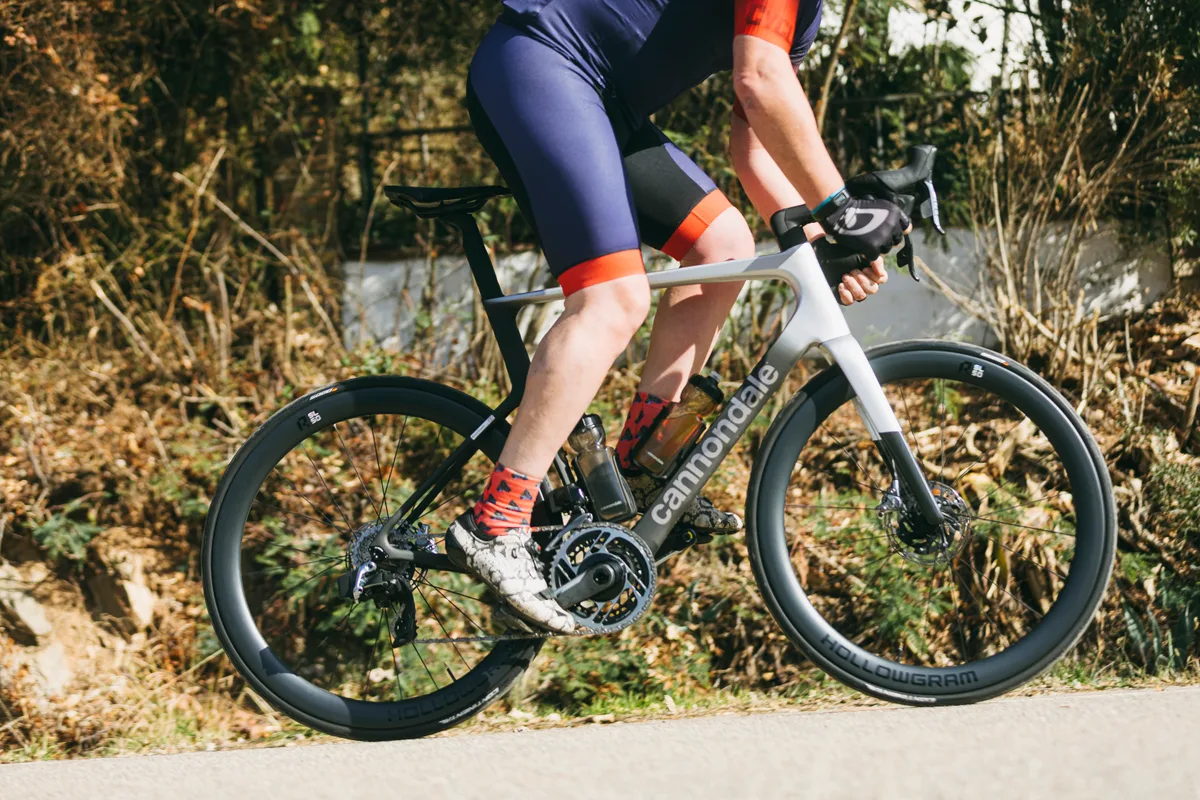
Fast bikes rarely announce themselves with fireworks anymore. The Cannondale SuperSix EVO is a sharper example of where high-end road cycling is heading: less drama, more fit pressure, tighter sizing, lower front ends, lighter parts, and a frame shaped around speed that still has to survive chip-seal roads, wet corners, and weekend group ride ego. For U.S. riders watching this launch, the biggest story is not only that another carbon road bike has arrived. It is that updated geometry now decides who gets the most from it and who may need more spacers, a different cockpit, or a different size. Cannondale says the Gen 5 platform lowers stack by 10 mm across sizes and replaces the former 51 with new 50 and 52 options, which makes fit a bigger part of the buying decision than the paint color. Riders comparing premium bikes through cycling gear coverage should look past the showroom shine and ask the blunt question first: can you hold the position this bike wants you to ride?
Why Cannondale SuperSix EVO Geometry Matters More Than the Paint
Geometry is where this launch gets serious. The frame still looks familiar from a distance, but the rider position tells the truth. A 10 mm lower stack sounds small until you ride two hours into a windy Saturday route outside Boulder, Austin, or Philadelphia and notice your neck asking for a vote. Lower can be faster, but only when your body can live there.
How updated geometry changes the ride feel
Updated geometry is not a decoration. It changes where your weight sits, how quickly the front wheel answers your hands, and how much room you have to breathe when the pace rises. Cannondale’s own line is clear: this frame was refined for racers, with a lower stack and tighter smaller-size steps.
That is a brave choice in a market where many riders say they want pro-bike speed but still need real comfort. The quiet catch is simple. A lower front end may help a flexible rider slice into wind, yet it may slow another rider who ends up stiff, tense, and sitting up every few minutes.
A local race example makes this plain. On a rolling criterium course in Tulsa, a rider who can stay low through the back stretch gains more than a rider who buys the same frame and stacks spacers under the stem. The bike did not fail the second rider. The position did.
Why road bike fit should come before frame tier
Road bike fit matters more here because this launch narrows the gap between “race ready” and “race demanding.” The updated size split, especially the move from one 51 option to 50 and 52, helps riders land closer to their ideal reach and stack. That is good news for smaller riders who often get forced into compromise.
The non-obvious part is that a less expensive build in the correct size can beat a higher-tier frame in the wrong one. A rider on a mid-level build with clean contact points, right saddle height, and stable reach will usually ride better than someone stretched across a flagship machine like a rented tux.
Cannondale’s sizing guide also reminds buyers that height alone is not enough. Inseam, standover, and body shape affect the final choice, and the company notes that modern size numbers do not always match one exact frame measurement. That should push U.S. buyers toward a shop fit before they chase a discount.
The Carbon Frame Story Is More Subtle Than Weight
The frame update is not a cartoon version of speed. No giant fin. No loud shape begging for attention. The work sits in smaller places: carbon layup, head tube shaping, cockpit integration, tire room, bottle placement, and the parts that mechanics touch when something goes wrong. That makes this carbon road bike more interesting than a spec-sheet race.
Where the lighter frame actually matters
BikeRadar reported claimed painted frame weights of 728 g for Lab71, 781 g for Hi-Mod, and 910 g for the entry carbon frame in size 56, with Cannondale also claiming a Lab71 complete bike weight cut versus the prior generation. Those numbers will grab attention, but weight is only one part of the ride.
A lighter frame helps when the road tips up or when you jump hard out of a corner. On a climb like Mount Lemmon, the gain feels clean because every repeated acceleration has less mass to drag uphill. Still, your tires, wheels, position, and pacing can erase a fancy frame’s advantage fast.
The counterintuitive truth is that the most expensive frame may not feel the most “worth it” for many Americans. A rider doing fast club rides in North Carolina may notice better tires and a dialed saddle before noticing the last grams saved in the layup.
Why cockpit and tire choices may shape daily speed
Cannondale lists the Gen 5 Lab71 with a full carbon integrated SystemBar Road cockpit, 700x29c Vittoria Corsa PRO TLR tires, and clearance for a measured 32 mm tire with extra space on each side. That tire room matters. Roads in the U.S. are not all smooth race lanes.
A carbon road bike with room for wider rubber can be faster on broken pavement because the rider stays calmer. Less bouncing means less wasted effort. More control means you brake later, corner better, and keep power steady when the surface turns ugly.
For riders building content plans around premium gear, this is also a smart place to connect related buying guides such as road bike wheel upgrade tips and carbon bike maintenance basics. The frame is the headline, but the ride comes from the system around it.
Race Position, Aero Gains, and the Real U.S. Rider
The launch lands in a market full of riders who want one bike to do too much. They want it light enough for climbs, fast enough for flats, calm enough for descents, and livable enough for four-hour weekend rides. That demand explains why the EVO sits in the “all-around race bike” lane instead of acting like a pure aero machine.
Why lower is not always faster
A lower stack can reduce frontal area, but only if you can hold the shape. Velo’s review noted that Cannondale chose a lower-stack direction while some brands have moved toward taller head tubes so everyday riders can maintain an aero posture with fewer spacers. That debate matters more than many buyers admit.
Here is the garage-floor version. If you lower the front end and your shoulders lock up, your elbows straighten, and your head pops up, the bike may be theoretically faster while you are slower. Aerodynamics punishes tension.
This is where road bike fit becomes the hidden performance upgrade. A fit session might tell you that you belong on the 52 instead of the 54, or that the stock bar width is wrong. That answer can sting after you have already fallen for a color. Better to learn it first.
What racers get that casual riders may miss
Racers understand that discomfort is not always a dealbreaker. They may accept a lower position because the effort lasts one hour, the course is known, and the prize is speed. A casual rider heading into a charity century has a different job. They need repeatable comfort.
BikeRadar’s ride review of the Gen 5 EVO 3 called out a longer and lower fit, plus a tested U.S. price of $6,999 and a 7.7 kg weight in size 56 with bottle cages. That places it in serious-buyer territory, not impulse-buy territory.
The non-obvious insight is that this bike may be kinder to committed amateurs than to casual premium shoppers. If you ride hard, train often, and know your fit numbers, the update makes sense. If you mainly want a beautiful Sunday machine, the geometry may ask more than you planned to give.
How to Decide If This Launch Is Worth Your Money
The right buying lens is not “Can I afford it?” That is too simple. The better question is whether the bike matches your riding body, your roads, your service options, and your honest pace. A launch can be exciting and still be wrong for you.
What to check at a U.S. dealer before buying
Start with size, then cockpit, then tire setup. Ask the shop to compare your current stack and reach with the new frame. Ask how many spacers will be needed. Ask whether the stock bar width and stem length suit your shoulders, not the marketing photo.
Also ask about service. The Gen 5 Lab71 frame uses a BSA 68 mm threaded bottom bracket, flat-mount discs, thru-axles, internal routing, and UDH according to Cannondale’s official spec page. Those details matter because they affect repairs, travel, parts swaps, and the patience level of your local mechanic.
Check the official Cannondale race bike page before you buy, because specs can change by model, size, and availability. Then call two nearby dealers. In the U.S., inventory can vary wildly between a large metro shop and a small independent store one county over.
Who should wait, and who should move now
Move now if you already know your fit numbers, race or train with intent, and want a fast platform that does not split climbing and aero into two separate bikes. The updated geometry rewards riders who are ready for a lower, more assertive position.
Wait if your current bike already feels too stretched, if you often ride with hand numbness, or if you have not had a recent fit. Also wait if you mostly ride rough chip-seal routes at relaxed speeds. You may love the idea of the bike more than the bike itself.
The surprising buying advice is this: do not chase the highest tier first. Test the shape. The frame family may be fast, but your best version could be a lower model with better tires, a cleaner fit, and money left for travel, events, and service.
Conclusion
The smartest way to read this launch is not as a simple upgrade story. It is a sign that road race bikes are getting more honest about who they serve. The Cannondale SuperSix EVO deserves attention because it sharpens the rider position, trims weight, keeps aero pressure high, and still leaves room for practical touches like wider tire clearance and service-friendly standards.
That does not make it the right bike for every rider. It makes it a better test of self-knowledge. If you know your numbers, ride hard, and want a carbon road bike that rewards commitment, this update has teeth. If you are still guessing at fit, start there before you spend premium money.
The launch is exciting, but the real win is not owning the newest frame. It is choosing the one that lets you ride faster without fighting your own body.
Frequently Asked Questions
How much does the updated EVO frame weigh?
Claimed frame weight depends on the tier. Reports list the Lab71 at 728 g, Hi-Mod at 781 g, and entry carbon at 910 g in size 56. Real complete-bike weight changes with wheels, tires, drivetrain, pedals, cages, and size.
Is the updated geometry too aggressive for casual riders?
It may be for some riders. The lower stack favors a race-focused position, which can feel fast if you are flexible and trained. Casual riders should compare stack and reach against their current bike before buying.
What tire width can the latest frame fit?
Cannondale lists measured clearance for up to 32 mm tires with extra space on each side. That gives riders room to run wider road tires for comfort, grip, and control on rough U.S. pavement.
Should I buy the top model or a lower build?
A lower build can be the smarter buy if the fit is better and you upgrade contact points later. The flagship frame saves weight, but fit, tires, wheels, and cockpit choice often shape daily speed more.
What makes the Gen 5 version different from the older one?
The main changes include lower stack, revised smaller sizing, frame and aero refinements, UDH, cockpit updates, and weight savings across the range. It looks familiar, but the position and details have changed.
Is this a good bike for long weekend rides?
It can be, but only for riders who handle a lower race fit well. For long rides, comfort depends on saddle choice, bar position, tire pressure, frame size, and how much drop your body can support.
Why does road bike fit matter so much here?
The frame is built around speed and a lower position. A poor fit can turn those gains into neck pain, numb hands, and wasted effort. Correct sizing helps the bike feel sharp instead of harsh.
Is the new EVO better for racing or everyday riding?
It leans toward racing. Strong amateurs, fast group riders, and fit-aware buyers will get the most from it. Everyday riders can still enjoy it, but they should test the position before treating it as an all-purpose comfort bike.